

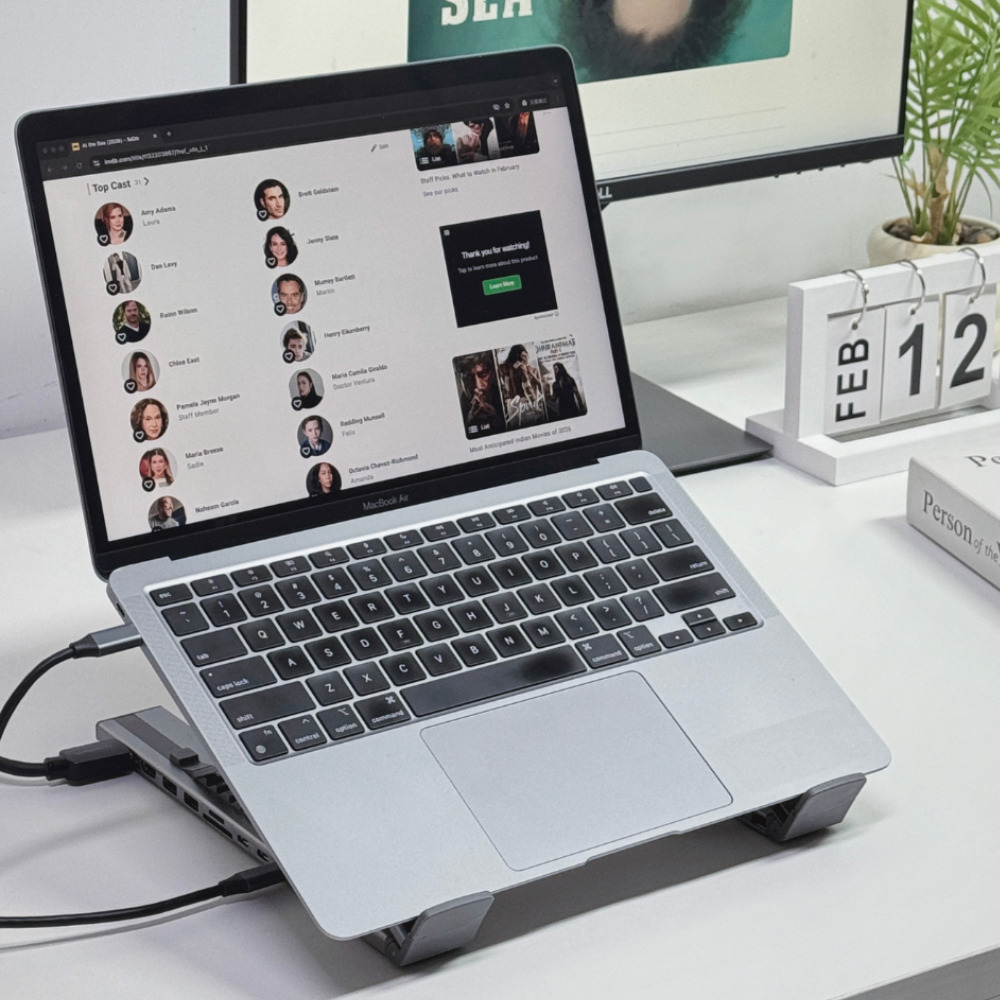
In today’s hardware market, docking stations have become essential tools for mobile and remote work. They offer expanded connectivity and promise to solve the growing complexity of modern devices. At first glance, it’s easy to assume that more ports mean more power — and a better product. But when we looked closer, we realized something important: most docking stations are designed for fixed desktop setups, yet they’re being sold to mobile workers.
1. From “More Ports” to Focusing on What Actually Matters
In many traditional dock designs, manufacturers add as many ports as possible to appeal to market demand — HDMI, USB, SD card slots, Ethernet, and more. On paper, they look powerful. In reality, very few users need all of these ports at the same time, especially when working on the move.
At Mukiya, we took a different approach. Instead of asking how many ports we could add, we asked which connections truly matter. When we observed how most Mac docking stations are used, it became clear that many are built around desktop assumptions: permanent desks, fixed monitors, and rarely changing setups. In mobile work scenarios, however, this abundance of ports rarely adds real value. For people who prioritize speed, clarity, and a smooth workflow, simple and reliable connections matter far more than variety.
2. Why “More Ports” Doesn’t Work for Mobile Work
Firstly, the essence of mobile work is flexibility and efficiency. Setup and teardown need to be fast and effortless. In this context, too many ports don’t add value — they add complexity. An overload of interfaces lengthens the connection process and forces users to make unnecessary choices. When using a multi-port dock, people often spend extra time deciding which cables to use and plugging and unplugging different connections, which directly contradicts the convenience mobile work is meant to provide.
Secondly, adding more ports increases not only the size of the product, but also affects stability and power consumption. Over extended use, additional interfaces and internal circuitry can generate excess heat and compromise performance. For mobile work tools, portability and long-term stability matter far more than the sheer number of ports.
3. Our Design Philosophy: Simple, Without Compromise
Therefore, at Mukiya, we follow a simple belief: simplicity is efficiency. We deliberately avoid adding unnecessary ports or features to our products. We understand that mobile workers value stability, reliability, and ease of use far more than a collection of rarely used interfaces. For this reason, Mukiya’s docking stations are designed around core user needs. By removing non-essential functions, we allow each product to serve mobile work scenarios in a more focused and meaningful way.
Through careful selection and optimization of ports, our docks support the majority of connections required for mobile work — while remaining compact and efficient. Features like fast charging, stable data transfer, and reliable high-resolution display output are prioritized, while seldom-used ports are intentionally left out to ensure a smooth, uninterrupted experience.
4. The Core Advantage of Mukiya Docking Stations: Stability and Focus
When designing each product, we never aimed for “more ports is better.” Instead, our focus is on enhancing user productivity and overall experience. Mukiya docking stations are built with mobile work in mind: by simplifying workflows and minimizing unnecessary setup steps, we allow users to focus on their work — not on adjusting or configuring their equipment.
In addition, we carefully optimize both port stability and power management. Every connection is designed to perform reliably, and the device as a whole can operate stably over long periods. By avoiding the complications of excessive ports, we reduce power consumption and heat buildup, ensuring that users can stay productive in any work environment.
5. Conclusion: Focus on What Matters, Return to the Essentials
In the AI era, efficiency and focus are every professional’s most valuable assets. Mukiya’s design philosophy is built around simplicity and effectiveness, helping users break free from complex tool setups and tedious configuration steps, so their energy can be focused on more meaningful work. We believe that products that truly enhance productivity should be simple, stable, and highly integrated tools — not a clutter of multiple ports and unnecessary features.
“Mukiya: Focused on core user needs, making work simpler and more efficient.”
Aktie:
The Reason Mobile Work Feels Tiring: Not the Environment, but Repeated Decisions
Work System Fatigue: How to Find True Focus in the Age of AI